

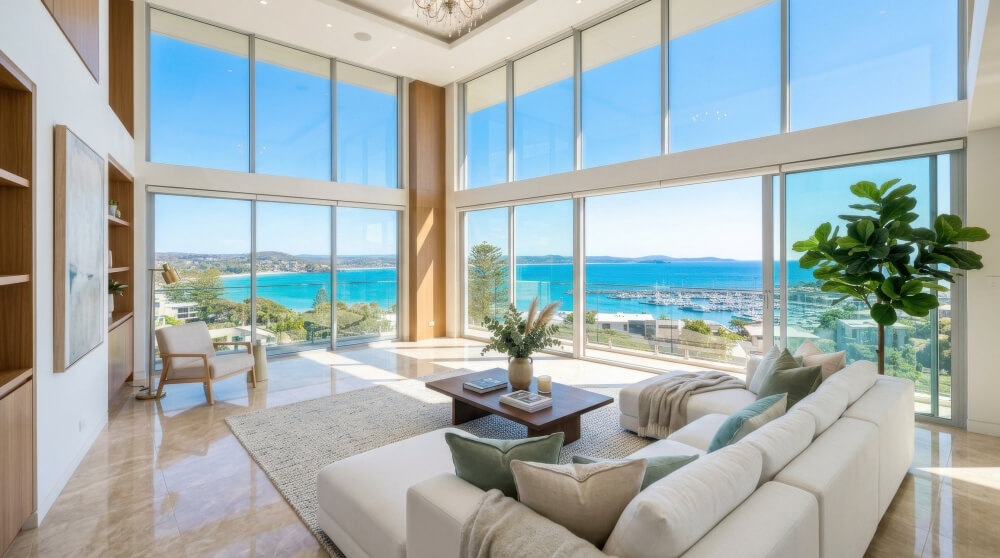
Smart glass: innovation and comfort to transform your home.
Advances in the materials used in residential construction are changing not only the way spaces are designed, but also the way we enjoy them.
Today, windows, patio doors and, in general, glazed enclosures can be much more than a simple barrier that lets in natural light and enhances views of the outside: there are solutions capable of regulating the amount of solar radiation entering a home, adjusting transparency or improving its thermal comfort.
These are known as smart glass, an innovative alternative that expands the possibilities of contemporary architecture and enhances the comfort of its occupants, as we’d like to tell you about today in this new article from gHouse.
What is smart glass?
Smart glass is glazing that can be installed in different parts of a building and whose properties can be modified by electrical, light or thermal stimuli.
Unlike conventional glass, which merely encloses a space, this new type of glazing adapts to specific environmental conditions or the needs of its users. For example, it can help save energy, control glare, make cleaning easier or provide greater privacy, as well as offering new aesthetic possibilities.
Types of smart glass for installation in a home
These are some of the main solutions available and their residential applications:
1.- Electrochromic glass:
This changes its tint when an electric current is applied, allowing the amount of light and solar radiation passing through the glazing to be adjusted using a remote control or a mobile app.
They are particularly useful for large windows, glazed façades and living rooms that are heavily exposed to the sun, where they help to control glare and heat gain.
2.- Glass with PDLC technology:
This incorporates a liquid crystal film that allows the glass to switch from a transparent to a translucent state using electricity.
They are recommended for bathrooms, shower screens, glazed doors or room dividers where you wish to maintain brightness without compromising on privacy.
3.- Thermochromic glass:
This also changes colour, but not through an electrical stimulus, rather in response to the outside temperature. In other words, it adjusts solar transmittance depending on how much the glass itself heats up.
They can be useful in windows exposed to intense solar radiation or in glass roofs in south-facing buildings. Their operation and effectiveness depend on the technology and climatic conditions.
4.- Photochromic glass:
This reacts to light intensity, darkening as light exposure increases and gradually regaining its transparency as the amount of light decreases.
They can be an ideal option for spaces with natural light where variable lighting is required, such as a glazed terrace used for a variety of purposes.
5.- Self-cleaning glass:
This is not ‘smart glass’ because it cleans itself – we wish! – but rather glass that incorporates a technology based on a special coating on the outer surface of the glass, which prevents dirt from becoming embedded, making it easier to clean.
At our architecture and interior design studio in Mallorca, we recommend them for glass roofs and large windows that are exposed to dirt from pollution, rain, salt from the nearby sea, and bird droppings…
The importance of choosing the right materials
Incorporating smart glass is not simply a matter of opting for the latest technology. The orientation of the property, the climate, the dimensions of the glazing and the requirements of each room determine which solution is most suitable, in addition to the objective a client has in mind when installing this type of advanced glazing.
This is why it is so important to consult an architectural practice that is familiar with the various innovative materials that can be incorporated into a project today, in order to assess their advantages, limitations and compatibility with the design of the residential building.
A well-informed choice can result in spaces that are more comfortable, functional and efficient, where innovation serves the needs of those who live there.